

Welcome to Tunegrape Issue #1.3! Things are about to get a little ambient, but if that’s not your jam don’t worry: things are also about to get a little trippy!
If that is also not your jam, this might not be your week. I’m sorry. You can come back next week to read about Muse and mosh pits and stuff like that.
‘Meyou’ by Julia Holter
Sometimes music needs to offer little more than ambience to have an all-encompassing effect. And sometimes you need a voice is all it takes to create that ambience.
Courtesy of an unnamed reddit user from r/musicsuggestions.
“Meyou” by Julia Holter is a study in building atmosphere through layers, in creating textures that swallow you up like a sometimes-itchy, oversized wool sweater. With building repetitions of the same words stacking up and occassionally devolving into screeches, yelps, vibratos, and scratches, Holter creates an alien sound chamber.
For someone my age, the obvious comparison point is Imogen Heap’s “Hide and Seek.” I learned of Imogen Heap from one of Zach Braff’s often-immaculate soundtracking achievements: “Garden State.” The soundtrack also introduced me to my beloved trip-hop music, so it will always hold a special place in my heart. And of course, there’s the Jason Derulo sample that I forgot about until I listened to the song while writing this.
But even more than “Hide and Seek,” what this reminds me of is the ambient music my wife and I sorted through in building out a playlist for research into music and psychedelic therapy that she did at the Yale-affiliated AZA Lab. The sort of music that you might hear at a yoga class or during a massage. I listened to tracks like “Rivulet” by Tonal Topographies and “Akasha” by Paul Horn in search of songs that could fit the requirements of playlists built for psychedelic therapy.
In the sequencing of the playlist, there were echoes of a past project I undertook.
The healing science of music and psychedelics
A few months before I met my wife, loneliness had begun leaking from its predefined layers of experience into other areas of living. It permeated everything. It felt punishing and sickening all at once. And I saw no way out.
At the same time, my innate but long-inactive desire to connect with the spiritual side of life was emerging. Maybe that went hand in hand with the loneliness. Probably, in fact. Like Hank Williams or Johnny Cash, sometimes I felt so lonesome I could cry.
And when I got my hands on a free bag of psychedelic mushrooms that summer, my empty weekend calendars filled with attempts to capture a fleeting glimpse of God.
I had long ago abandoned the pursuit of heavier trips. Instead, I planned to go just past the hallucinatory threshold each weekend for a month in search of spiritual healing.
The final weekend would be the ultimate test of this strategy: I curated a three-hour playlist aligned to the stages of a mushroom trip from onset through peak. I was going to lie on my couch, eyes closed and headphones in, as the music carried me through the trip.
I didn’t know at the time that this plan wasn’t far from what researchers like Helen Bonny and Bill Richards were doing decades prior.
Science-backed music for psychedelic therapy
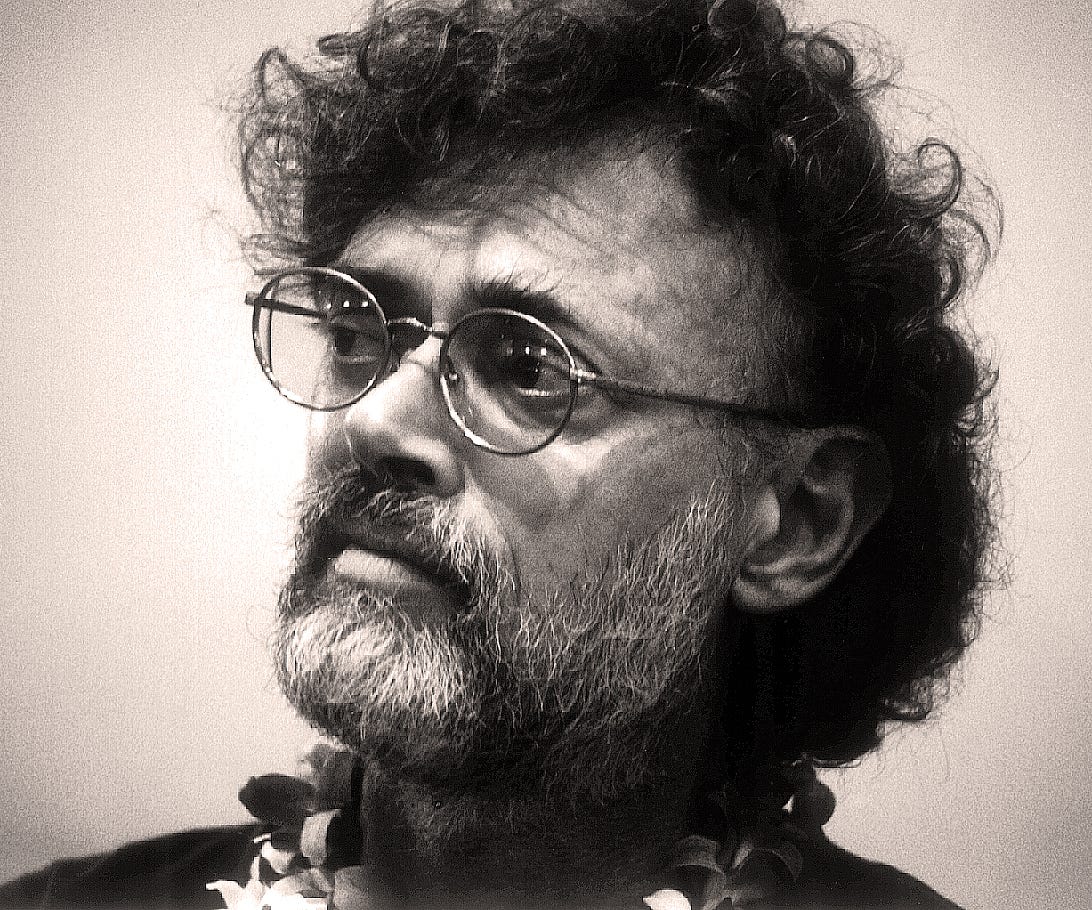
Psychedelic researcher and advocate Terence McKenna wrote that magic mushrooms catalyzed human evolution and conciousness. In books like “Food of the Gods,” he speculated that religion also came from visions experienced by early humans during psilocybin trips.
I’m not so sure mushrooms are the source of human consciousness and religion. But the effects of psychedelic drugs are profound. And their effects are made even more profound by music. We see this in the work of psychedelic medicine pioneers like Richards and Bonny, or those continuing their work like Dr. AZA Allsop, the founder of the AZA Lab.
It’s through my wife’s work as a research fellow with the lab that I learned about Richards, Bonny, and the story behind the Johns Hopkins Psychedelic Therapy Playlist.

While psychedelic therapy is growing more mainstream, less discussed is the role music is thought to play in amplifying the healing effects of these drugs. The work of Bonny and Richards helped define this field.
“We were working with 33 RPMs and turntables, and always trying to decide what record to play next,” Richards said. “We developed a certain intuitive list of favorites that just seemed to work well with a lot of people. … People’s experiences were going deeper and deeper, becoming very profound.”
Bonny was a music therapist, and Richards is a psychologist researching psychedelics who joined the Johns Hopkins University School of Medicine in 1999. After meeting at a conference Bonny helped organize, he offered her a position at the newly constructed Maryland Psychiatric Research Center, and she moved her family from Kansas to join the center. It was Bonny who curated the researchers’ playlists for psychedelic therapy—sequences that would inform the Johns Hopkins Psychedelic Therapy Playlist.
Together, they developed a framework for sequencing these playlists aligned with the phases of a psychedelic trip. Dr. Allsop built on this framework with his own study comparing the classical music common in the Bonny iterations with modern cinematic scores. The components of the framework are:
Pre-onset or Ascent
Peak
Re-entry or Descent
Return
As the playlist progresses toward the peak, the music builds, and then, following the peak, it retreats. In this way, it mimics the structure of the psilocybin trip itself. The early stages should be structured and dependable, according to Richards.
“It’s going somewhere, it’s picking you up and carrying you. It’s got some force, some substance,” he says. “It doesn’t have very unpredictable changes of rhythm or something that’s going to startle or frighten you. So, it’s a net of reassurance, almost, and of leadership.”
Dr. Allsop’s cinematic playlist is sequenced on similar principles. With selections from the Bonny playlist, Dr. Allsop’s track list, and my own clumsily assembled version, you can see how each approached these early stages. To ensure a comfortable entry into the psychedelic plane, you should begin with calm, predictable, and at times near, if not outright, ambient songs.
These give way to increasingly percussive, aggressive, or emotional music. As the peak approaches, the long, droning stretches of notes and recurring loops give way to staccato chords or dark and slow-building tensions.
We’ll soon get to the crème de la peak of my playlist, but first, I want to point out one of my favorite songs from the ascent: “La Mer” by Nine Inch Nails. It’s a song with tension that builds in exquisite crashes and dissonance over a looping piano line.
From there, we come down. Voices can be helpful during the comedown as the return to regular human experience progresses.
Research into the combination of psychedelics and music is ongoing, but labs like AZA Lab are also studying the healing effects of music alone. Even divorced from mind-altering drugs, the science shows that music can help pave the road to recovery, or at least a semblance of regularity. For example, there’s AZA Lab’s Music Mindfulness Study.
“We utilize community drum circles, music mindfulness groups, music sharing circles, and music-Cognitive Behavioral Therapy as forms of therapeutic expression and as mediums to fortify social connectedness, alleviate trauma and stress, and mitigate depression and anxiety,” the lab’s website says.
The results of one study called “Music Mindfulness Acutely Modulates Autonomic Activity and Improves Psychological State in Anxiety and Depression” are promising. The lab found that music increased heart rate variability (higher HRV is a sign of calm) and boosted activity in areas of the brain that handle emotion regulation, focus, and self-awareness. Whether participants attended live or virtual sessions, the results were measurable. However, only the former also fostered social connections.
Where these treatments go, who knows? But, we’re in good hands with AZA Lab. I know that. And in fact, psychedelic treatments are so effective at rewiring the brain, it’s hard to fault anyone for thinking they’ve been handed to us from a higher realm.
…so what happened with the mushroom playlist?
If you’re going to pursue psychedelic therapy or psychedelic music therapy, please do so in consultation with a professional. While this treatment should certainly be more accessible than it is, doing it without the help of a professional can be dangerous.
I spent most of the first few hours of the trip watching colorful patterns mold and meld and slide across the back of my eyelids. But there was no evidence of God within them. As the effects grew stronger and the music grew louder and more chaotic, those movements peaked.

When John Coltrane’s “A Love Supreme, Pt. I - Acknowledgement” came on, the chaos exploded in speed and intensity as horns bleated and, toward the end of the track, the chants repeating the song’s title echoed through my skull. But still no God.
After just over 30 minutes, “A Love Supreme, Pt. IV - Psalm” came to a close, and everything shifted on the arrival of “Your Hand in Mine” by Explosions in the Sky. The chaos gave way to a bright flash of gold-tinged white light at the ring of the first note. It felt as if after a veering journey in search of supreme love, I was being granted evidence that I was, in fact, hand in hand with God.
Here’s a short poem I wrote about the experience toward the end of my trip:
ant colony

cocaine rush
of digging roots
pushing into me.

funnels of light purge
tunnels, burrowed like
an ant colony
in my chest.

filling with the		Supreme.

belief is like the warm embrace of family.

salvation like a bath:
watch it well up in the floor and swallow you whole.
sink into the water
and be baptized.
My spiritual journey is ongoing. But the glowing light arriving just as “Your Hand in Mine” came on, and just after “A Love Supreme,” felt like a pivot point. And with that turn came a sense of relief. Of healing.
I wasn’t treating a serious medical condition like depression. But I did feel as if a new mental plane had opened up to me. Like I had attained a swipe card for an upper deck of spiritual access. A new level of communion with a Creator.

Richards noted how meaningful Bonny’s music choices were during psychedelic music therapy sessions for patients being treated for substance use disorder.
“It took on meaning in the struggle, the unfolding, the dissonance being resolved,” he said. “They could understand that that type of classical music is a language about life and human experience. And when you’re in the music, it’s so different from listening to the music.”
The music helped push me to a better place, too. I’ll never forget that the sequence made that clear to me.
Sure, you can say that the spiritual experiences I describe are just extensions of the drug’s effects. But maybe that’s why these chemicals exist. Were created. As a pathway to God.
Of course, psychedelics that alter brain chemistry, dissolve the ego, and heal disorders as a potential conduit to God are a well-trod path. I have a friend who got a free vaporizer pen packed with DMT hits in return for joining a church! And I wouldn’t go so far as to say mushrooms developed human consciousness. But are psychedelics here to offer us a touch of God’s healing and grace?
And if that’s the case, why not music as well? Really, this can spiral out infinitely: if God is in mushrooms and God is in music, why not everything?
What song is a spiritual experience for you? Tell us below for a chance at a future feature:
See you next week with a song suggested by another human.